
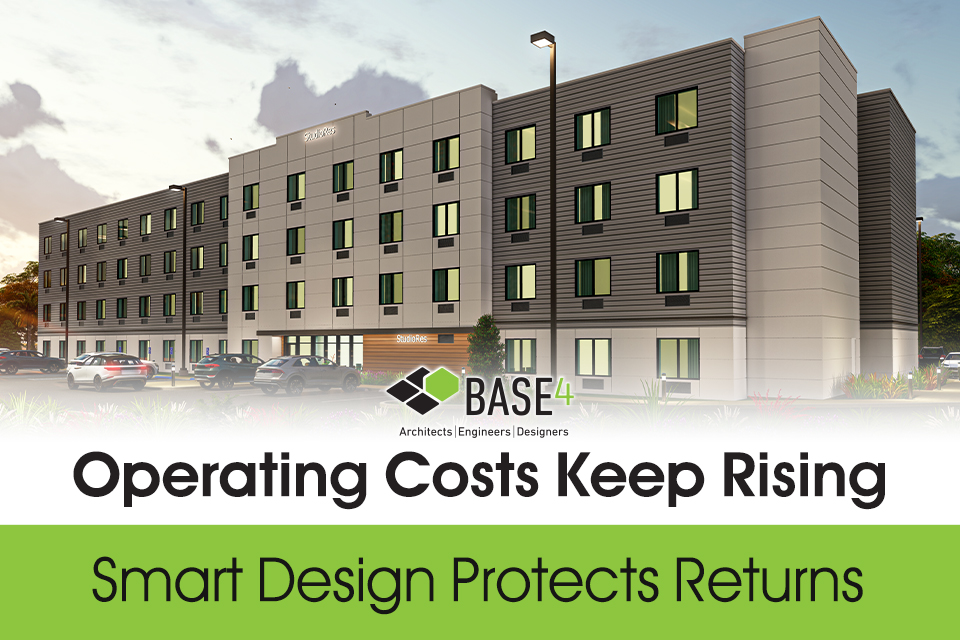
Operating costs are rising faster than rents.
For many hotels and multifamily assets, labor alone now represents 30–40% of operating expenses.
A design decision that adds two minutes to housekeeping per room may not seem significant.
But across a 150-key property, that small inefficiency compounds into thousands of labor hours every year. Over the life of the asset, that becomes millions in operating cost.
What many owners miss is this:
The most expensive operating problems in a building are not management failures.
They are design decisions made long before construction begins.
Floor plan layouts, service core placement, corridor length, and system complexity quietly lock in operating costs for decades.
Smart design protects NOI long before the building opens.
 Most operating inefficiencies aren’t management failures. They’re embedded in design.
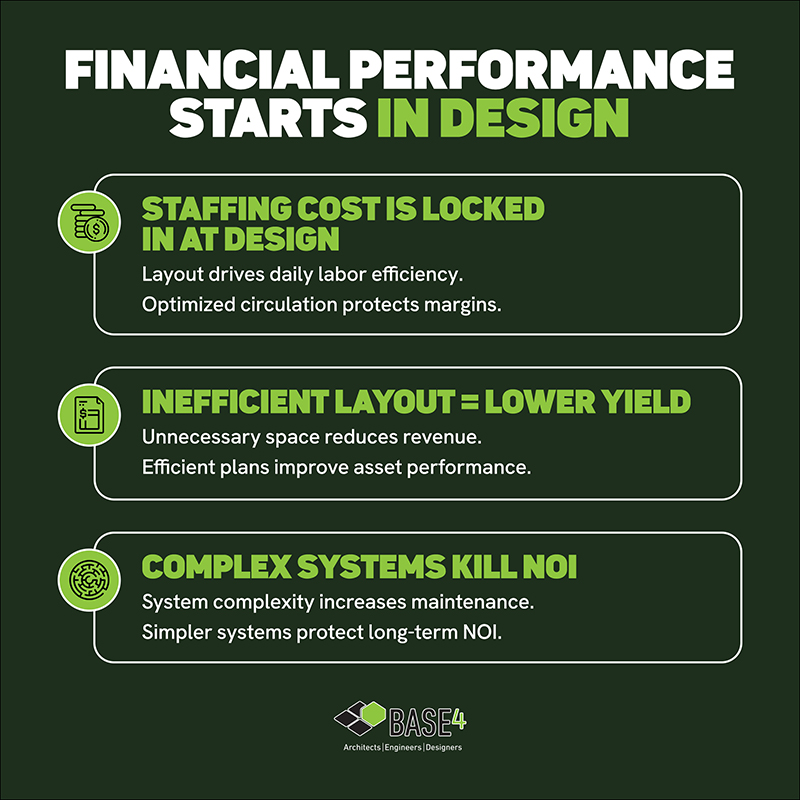
Labor Efficiency Is Designed, Not Managed
Labor has become one of the largest operating pressures on hospitality assets.
Many staffing challenges are driven by the way buildings are planned.
- Corridor length affects housekeeping time.
- Service core placement affects routing efficiency.
- Back-of-house layout affects productivity.
- Elevator strategy affects staff movement.
Efficient layouts reduce daily labor hours.
Those hours compound across years of operation.
Square Footage Discipline Protects Yield
Every unnecessary square foot affects asset performance.
- It increases cost per key.
- It reduces revenue per buildable square foot.
- It expands long-term capital exposure.
Oversized common areas, inefficient service spaces, and excess circulation quietly reduce building performance.
Dimensional discipline during early planning protects both upfront construction cost and long-term yield.
Engineering Simplicity Reduces Lifecycle Expense
Complex building systems create long-term operational volatility.
Overcomplicated infrastructure often leads to:
- Higher maintenance labor
- More frequent system downtime
- Accelerated capital replacement cycles
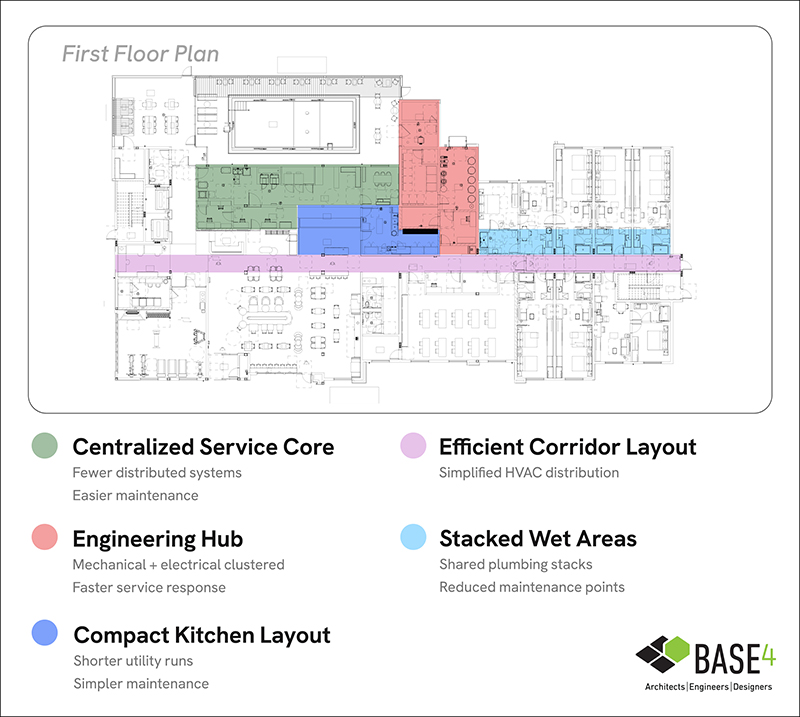
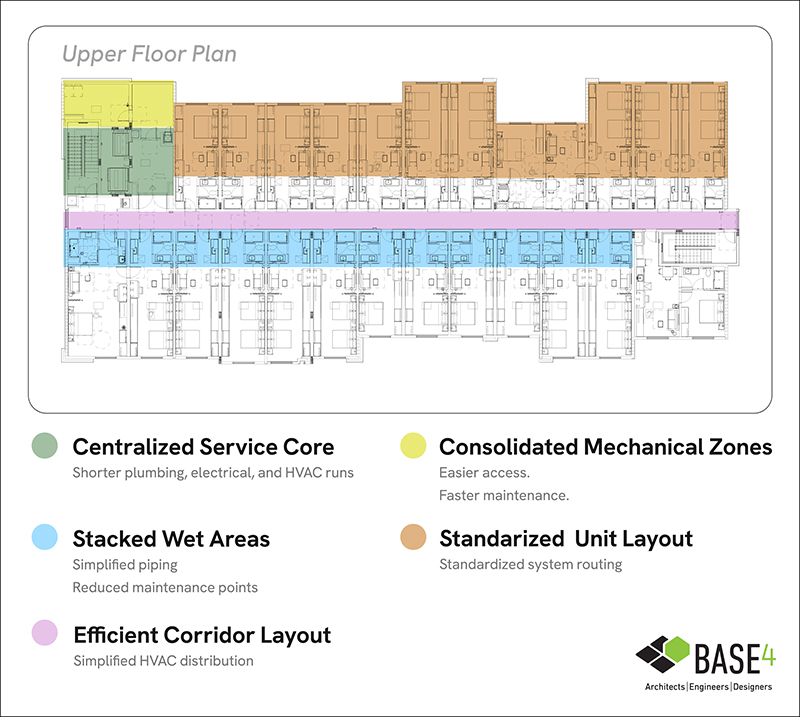
Simple, coordinated engineering systems are easier to access, maintain, and operate.
These decisions reduce lifecycle expense and help protect long-term NOI.
Margin Protection Requires Integrated Design
Operational efficiency is not something operators fix after opening.
It is designed into the building.
By integrating architecture and engineering from the beginning, inefficiencies can be solved early rather than embedded permanently.
At BASE4, buildings are designed with operational performance in mind from day one.
The result is simpler systems, more efficient layouts, and stronger long-term building economics.

Thank you,
Blair Hildahl
BASE4 Principal
608.304.5228
BlairH@base-4.com