
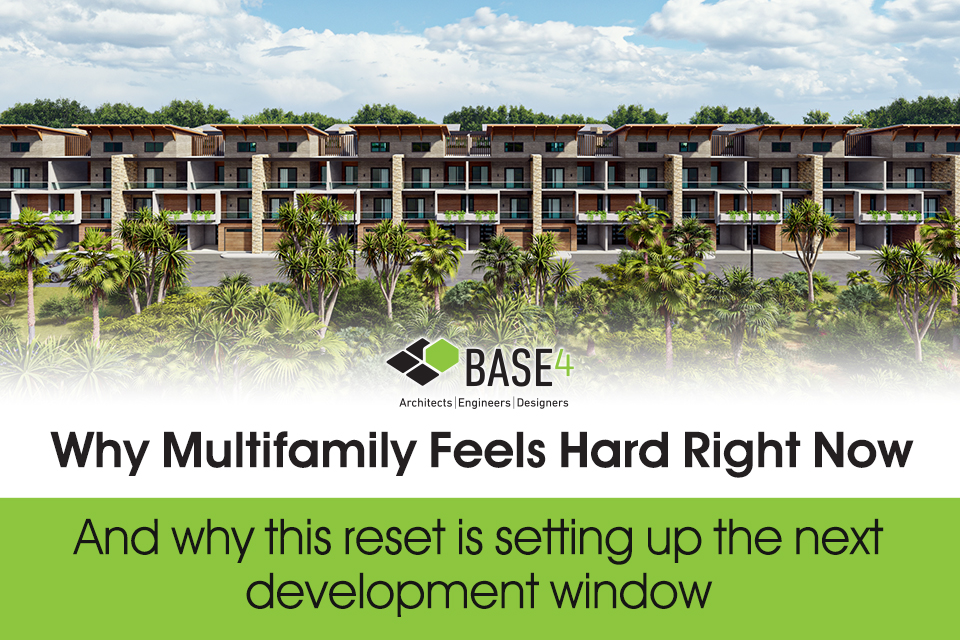
Rents aren’t jumping. Lease-ups are slower. Capital is cautious.
If multifamily feels harder than it did a couple of years ago, you’re not imagining it, but this isn’t a downturn.
It’s a reset after a historic supply surge.
What’s Actually Happening
The market is absorbing one of the largest apartment delivery waves in decades.
Most of that supply is hitting right now—projects that started during the 2021–2022 boom. At the same time, new multifamily starts have dropped sharply, meaning there’s far less competition coming behind today’s deliveries.
In simple terms:
The worst oversupply is being delivered now.
And the pipeline after it is thinning fast.
This setup matters. Historically, when supply peaks and new starts fall, the market begins setting up its next healthier cycle. That’s why many indicators point to a stronger development window forming in 2026–2028.
Where the Market Is Tight—and Where It’s Tough
- Near-term pressure:
Sunbelt boom markets like Austin, Phoenix, Nashville, Orlando, Tampa, and Raleigh. Demand is still there, but too much inventory arrived at once. The result: concessions and slower lease-ups. - More durable fundamentals:
Midwest and Northeast markets—Chicago, Columbus, Kansas City, Indianapolis, Boston, DC, and select NYC submarkets—where limited new supply is supporting steadier performance.
Product Types That Still Work
The strongest opportunities are tied to durable demand:
-
Affordable & workforce housing — demand far exceeds supply
-
Build-to-rent (especially attached) — families priced out of ownership
-
Adaptive reuse — faster paths with lower entitlement risk in many cities
-
Mid-market / missing middle — strong demand, little new supply
-
Senior housing — underbuilt with long-term demographic tailwinds
The Real Opportunity
This is a reset—not a retreat.
The next winners will be teams that design smarter, reduce entitlement and construction risk early, and focus on durable demand instead of peak rents.
Multifamily isn’t broken.
It’s being reset.
And resets are where the next advantages are built.
How BASE4 Helps Developers Build Faster in 2026
BASE4 supports fast-moving developers with a design approach built for speed and predictability.
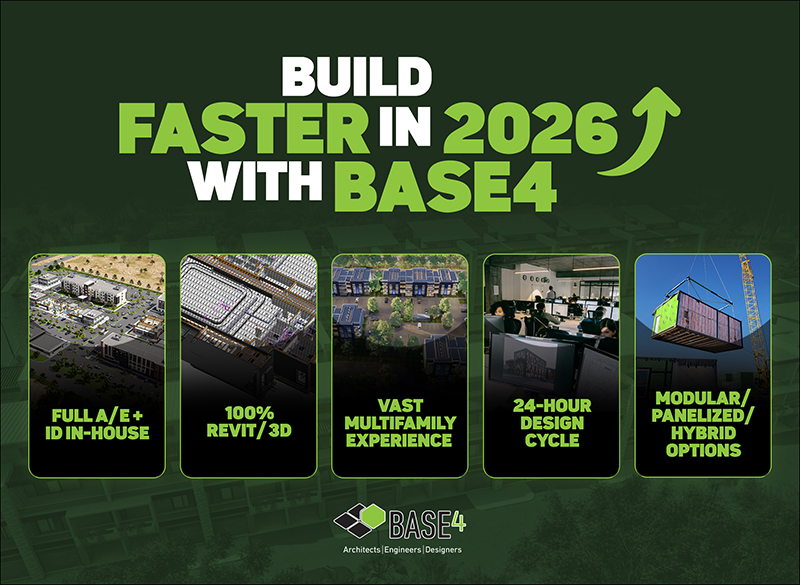
When timelines stabilize, the advantage goes to teams that plan smarter — starting with standardized design, AI-supported planning, and delivery methods that reduce onsite risk.

Thank you,
Blair Hildahl
BASE4 Principal
608.304.5228
BlairH@base-4.com

Source:
1.U.S. Census Bureau — Multifamily starts, permits, and completions data
2.National Multifamily Housing Council / National Apartment Association — Construction pipeline trends and delivery volumes
3.CBRE — U.S. Multifamily Market Outlook (supply, absorption, regional performance)
4.Yardi Matrix — Rent growth, supply forecasts, concessions, and lease-up trends
5.Freddie Mac — Long-term U.S. housing supply shortfall and demand outlook
6.National Low Income Housing Coalition — Affordable and workforce housing supply gaps