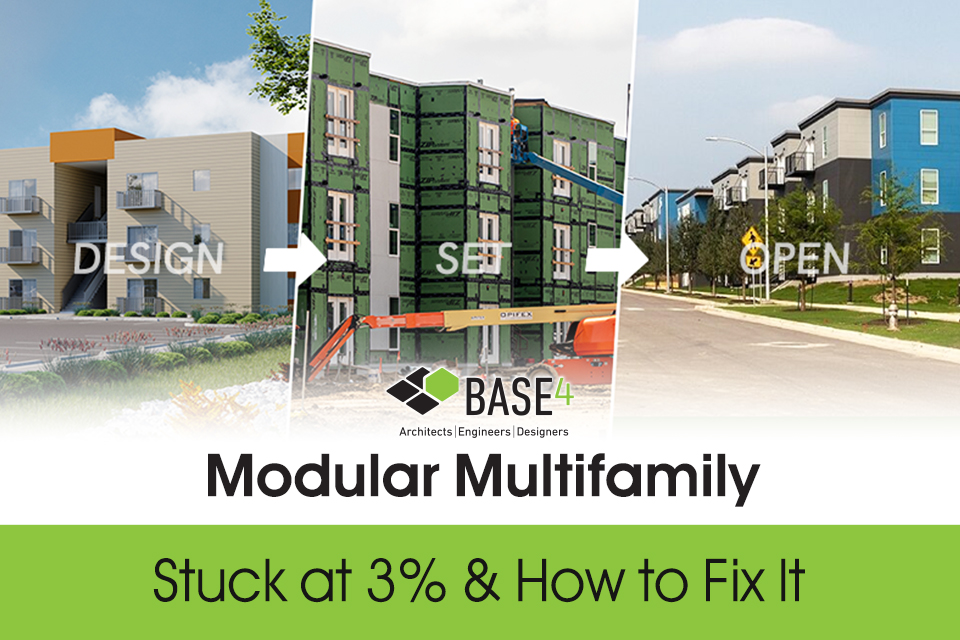
Developers love the promise of modular—but adoption’s stuck at 3%. Why? Because coordination, financing, and schedule risks still scare teams off.
The Market Snapshot
Last year, just 3% of multifamily properties used modular methods—down from 7% the year before (NAHB/Eye on Housing, 2025). Adoption has hovered in the low single digits for decades, peaking near 5% in 2000 and 2011.1
Why Developers Struggle with Modular
-
Financing friction: Modular needs upfront capital that doesn’t fit traditional draw schedules.
-
Design misalignment: Modular firms enter too late—when designs are already incompatible.
-
Incomplete pricing: Factory quotes cover only part of the job—leaving developers guessing at site, crane, and logistics costs.
-
Complex approvals: Codes, inspectors, and logistics slow factory-built structures.
-
Stakeholder friction: GCs and trades resist change and loss of control.
-
Unproven ROI: Few large-scale successes keep developers cautious.
These roadblocks—not the modular method—are what stall adoption.
The Details That Make or Break Modular
Every successful modular project comes down to early precision—tight coordination between factory and field. That’s where BASE4 bridges the gap:
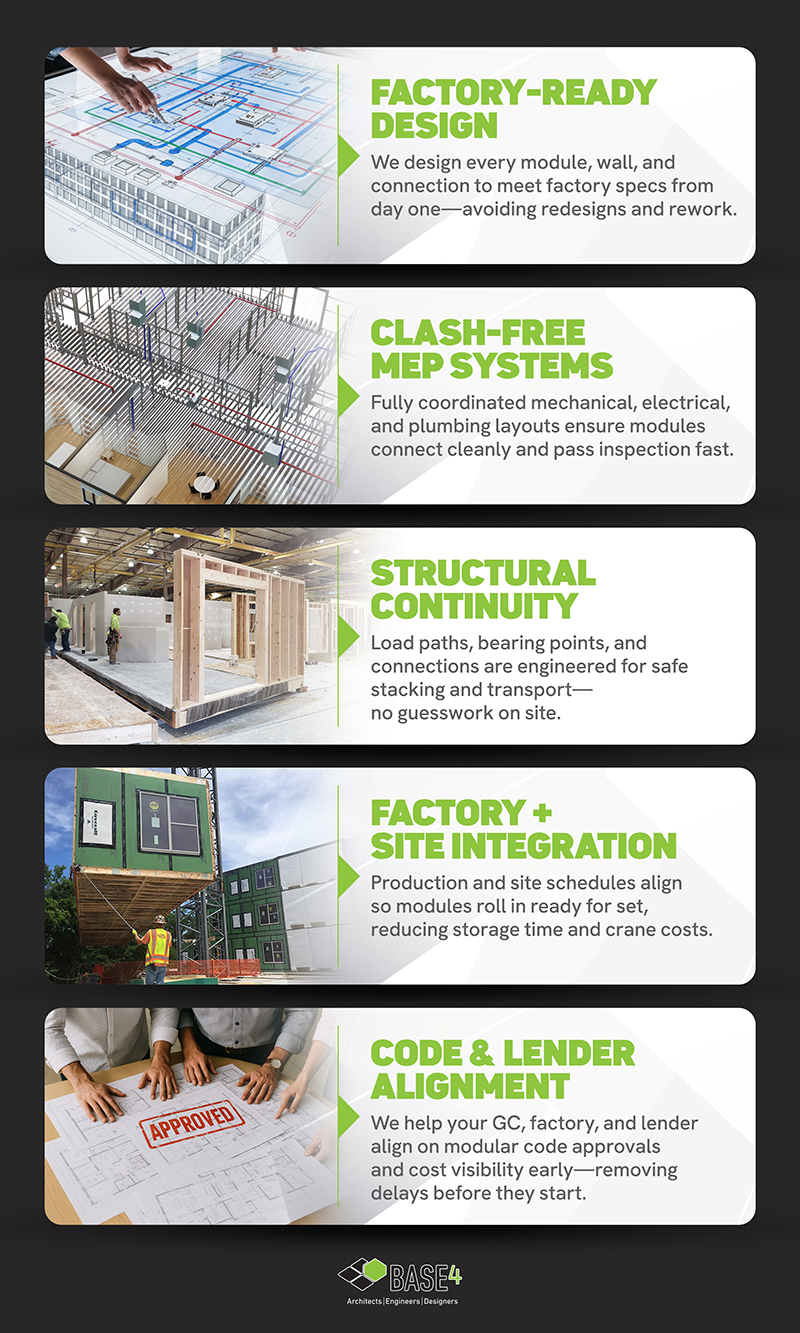
How BASE4 Makes Modular Viable
We bring your factory, GC, and lender together from day one—eliminating the design, scope, and approval gaps that derail modular schedules and budgets. With BASE4, your project is factory-ready from the start.

Thank you,
Blair Hildahl
BASE4 Principal
608.304.5228
BlairH@base-4.com

Source:
1.NAHB / Eye on Housing, 2025