

If you’re looking at office-to-multifamily conversions right now, you’re not alone.
According to CBRE’s 2025 Office Conversion Tracker, about 12.8 million square feet of office space across major U.S. markets is being converted to other uses.
But the real question is simple:
Is your building actually a smart candidate?
Let’s break down what separates a viable deal from a risky one.
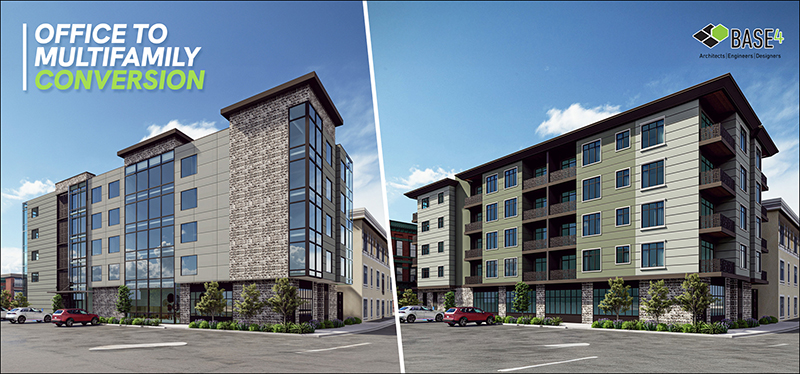
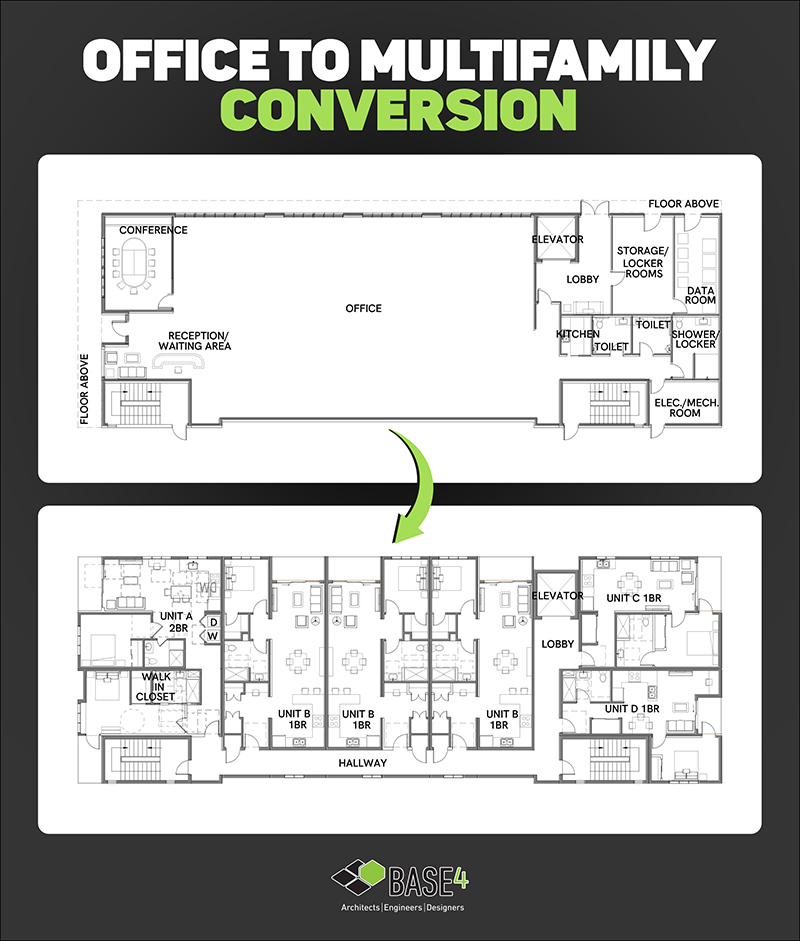
Office-to-apartment conversions accelerated over the past year.
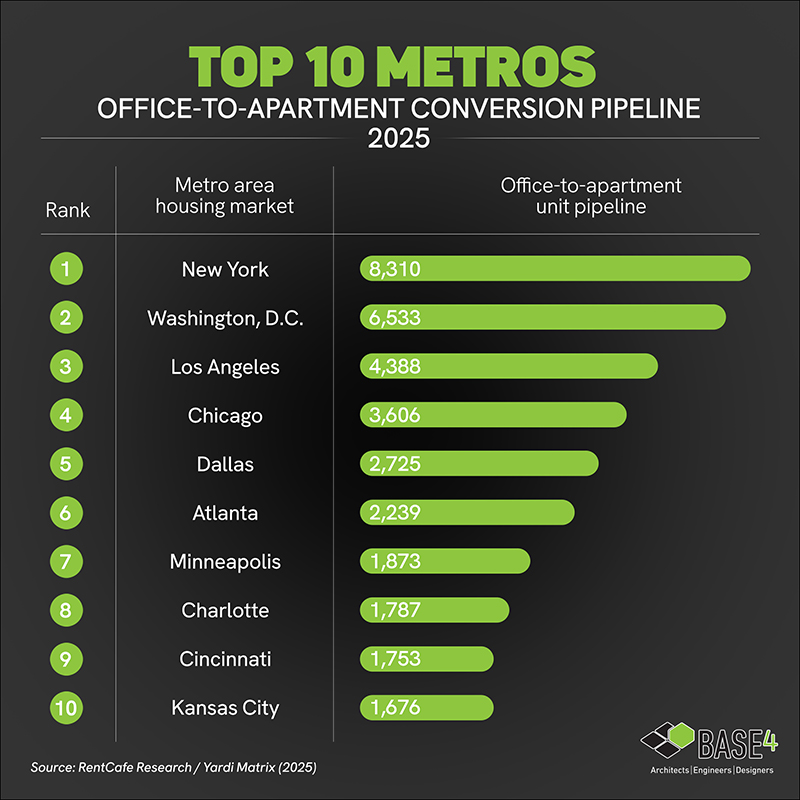
Yardi Matrix reports that units in conversion pipelines grew from roughly 55,300 entering 2024 to about 70,700 in 2025, a 28% increase year over year.
Multifamily remains the primary destination.
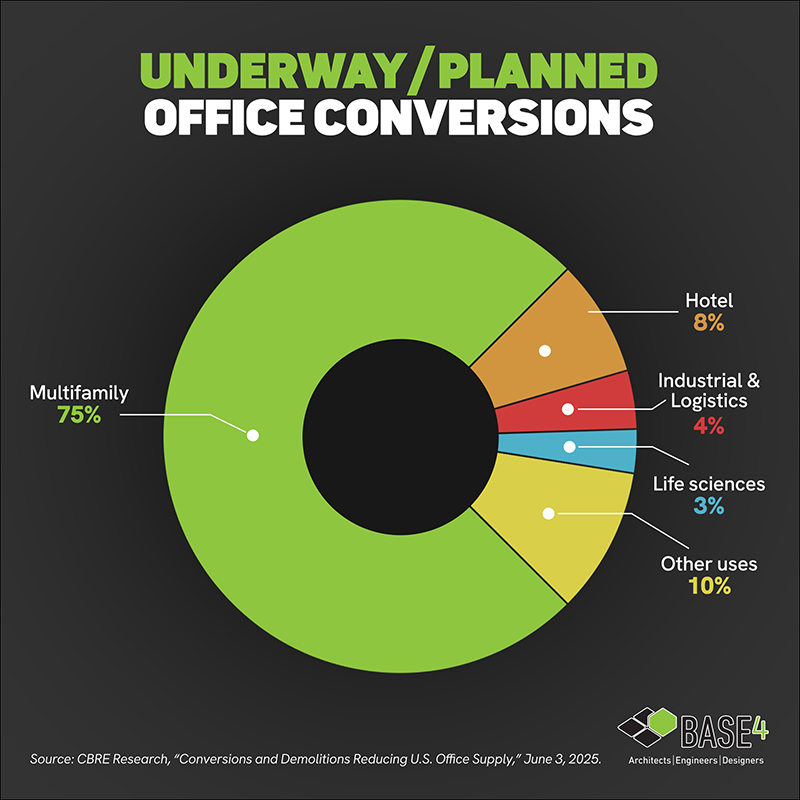
Many projects are studied, but far fewer are approved.
The opportunity is large but highly selective, and early design feasibility analysis is critical.
The Three Filters That Decide the Deal
1. Layout Efficiency Protects Margin
Most deals fail here.
-
Deep floor plates, misaligned grids, inefficient cores, and envelope upgrades reduce unit yield.
-
Lower yield means higher cost per unit. Higher cost per unit compresses returns.
-
Feasibility testing must happen before acquisition.
2. Market Strength Supports Rent
-
Office vacancy ≠ housing demand.
-
Some neighborhoods absorb new units steadily. Others struggle to fill them without lowering rents.
-
Location matters. Access to retail, transit, and daily services supports leasing velocity and rent stability.
3. Incentives Improve Feasibility. Regulatory Barriers Increase Cost
-
Holding time increases interest exposure.
-
If rezoning or entitlement changes are required, delays push back stabilization and increase carrying costs.
-
In some markets, adaptive reuse incentives and streamlined approvals improve feasibility. In others, regulatory friction erodes margin.
Even with strict feasibility limits, conversion pipelines are expanding across major metros.
The BASE4 Approach
Conversions only work when three things align:
market demand, building layout, and approvals.
Miss one, and the deal weakens.
BASE4 evaluates office-to-multifamily conversions through a design-and-engineering lens directly tied to financial performance.
We pressure-test layout efficiency, structural and MEP scope, and regulatory risk before capital is committed.
Architecture and engineering decisions should protect margin, not weaken it.

Thank you,
Blair Hildahl
BASE4 Principal
608.304.5228
BlairH@base-4.com