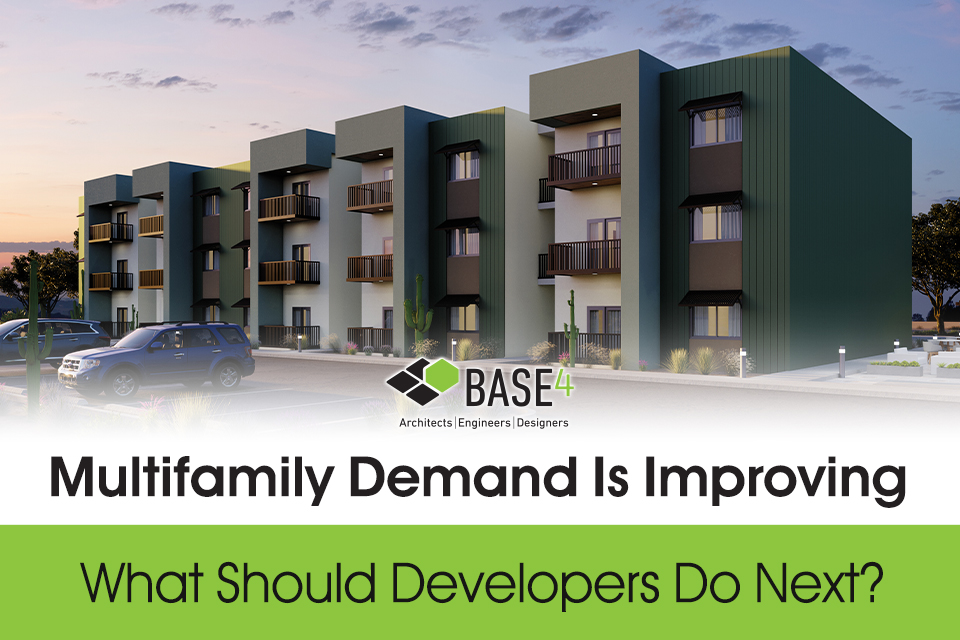
Multifamily demand is giving developers a stronger backdrop. Newmark’s Q2 2026 report recorded more than 279,000 units of absorption in the first half of the year, the second-highest first-half total on record.
That creates opportunity. But stronger national demand does not mean every metro, submarket, or site is ready for the same product.
Stronger demand changes the deal.
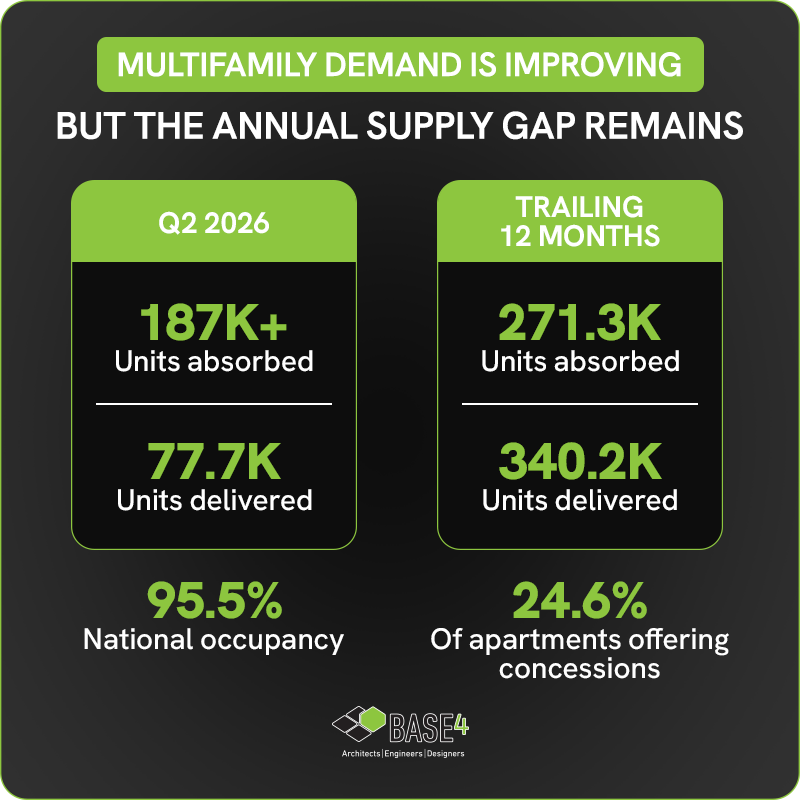
The market is working through the recent supply wave. RealPage reported more than 187,000 units absorbed during Q2, while U.S. occupancy stood at 95.5% in July.
For developers, that is a reason to revisit sites or projects that may have struggled under older assumptions.
What to test: Update achievable rents, concessions, occupancy, nearby deliveries, and current cost assumptions. A project that did not work a year ago may deserve another look.
Metro growth can hide site-level risk.
The recovery is uneven across markets. Strong metro-level rent growth can signal opportunity, but it is only the first screen. The bigger question is whether the submarket and competitive set support the site’s rents, unit mix, and lease-up assumptions.
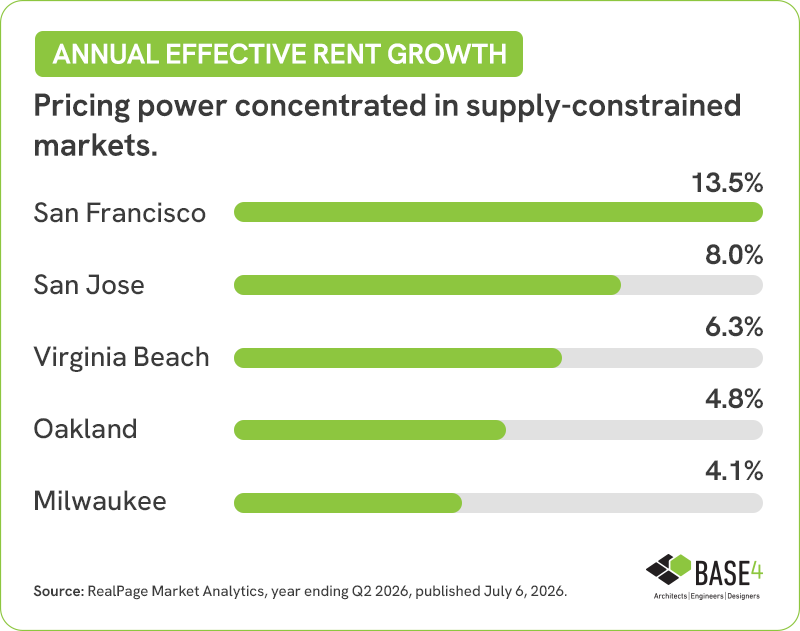
What to test: Build the competitive set around the site. Compare effective rents, concessions, lease-up, upcoming supply, and unit-type performance before locking in the program.
Better demand does not guarantee pricing power.
National rents are improving, but market conditions remain uneven. RealPage reported that U.S. same-store effective asking rents returned to positive annual growth of 0.4% in July, while supply-heavy Sun Belt markets, including San Antonio, Tampa, Phoenix, Austin, and Charlotte, were still recording rent declines. The national recovery should not automatically become the project’s rent-growth assumption.
What to test: Underwrite the competitive set, not the headline. Test slower rent growth, longer concessions, competing deliveries, and a longer lease-up period before committing to the deal.
Design for the Market You Actually Have
Market research matters most when it changes what gets built.
BASE4 helps developers translate submarket and competitive-set findings into the building program:
- Test unit mix and unit sizes before they are locked in.
- Align amenity spend with what supports rents and leasing.
- Set cost targets early and design to protect them.
- Coordinate architecture, interiors, structural, and MEP around one program.
- Use 100% Revit/BIM coordination to identify conflicts before construction.
- Test prefab or offsite strategies where they can improve cost or schedule.
The goal is to ensure the building fits the demand, rents, and cost structure that the site can actually support.

Thank you,
Blair Hildahl
BASE4 Principal
608.304.5228
BlairH@base-4.com