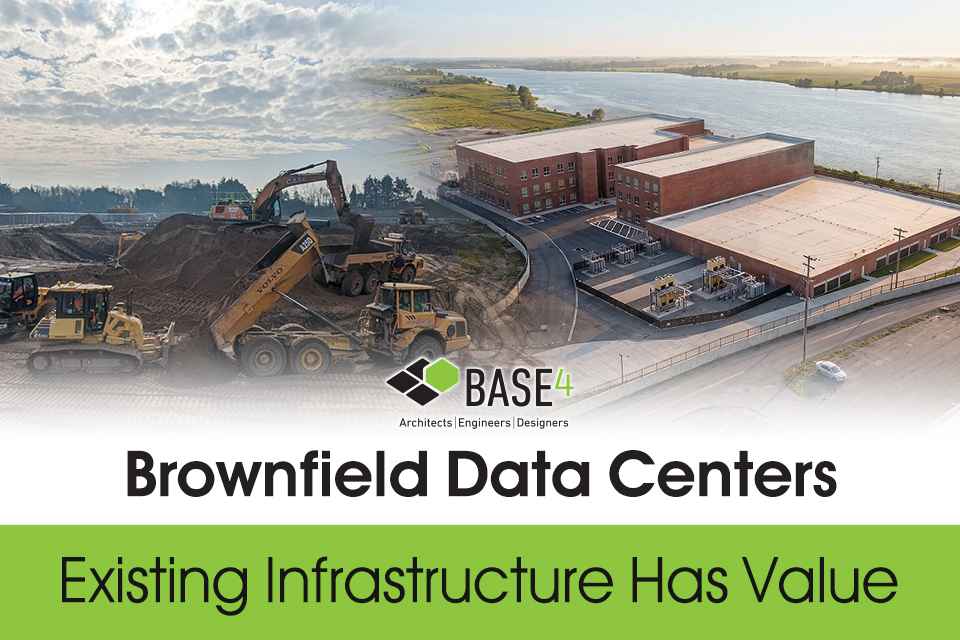
A brownfield site may appear ready for development because it already has power, utilities, roads, structures, or industrial zoning. But existing infrastructure only creates value when it can support the proposed data center without major upgrades, delays, or new environmental risk.
Verify the Savings Before Pricing
Before those assumed savings shape the purchase price, financing plan, or project schedule, developers should confirm:
- What can remain
- What needs an upgrade
- What must be replaced
- Which condition could delay power or permits
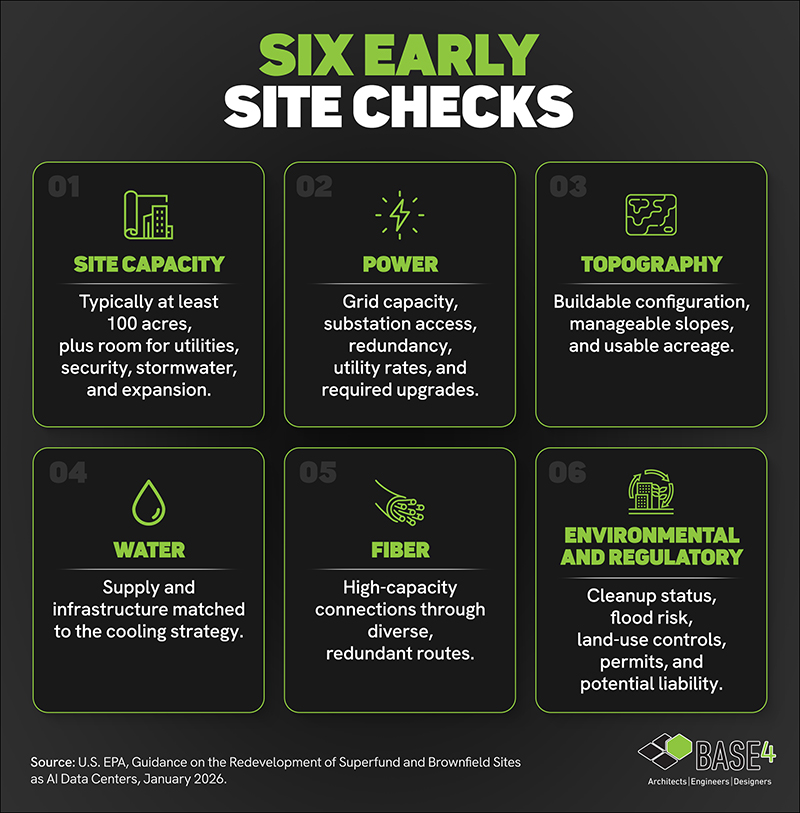

Find the Condition That Controls the Schedule
One unresolved issue may determine when the site becomes power-ready or permit-ready. It could be a grid upgrade, environmental study, cleanup requirement, demolition package, or land-use approval.
The goal is not to avoid brownfield sites. It is to expose the real cost, scope, and schedule before the deal is locked.
How BASE4 Reduces Site Risk
BASE4 tests whether the proposed data center fits the site that actually exists.
- Early planning tests reuse assumptions before pricing.
- In-house disciplines review site constraints together.
- MEP coordination identifies power and utility gaps.
- Structural coordination tests whether existing buildings can remain.
- Cost-aware design compares upgrades against replacement.
- Revit coordination maps restricted, usable, and expansion areas.
Brownfield advantages can be real, but only after they are tested. Confirm the site conditions before assumed savings shape the deal.

Thank you,
Blair Hildahl
BASE4 Principal
608.304.5228
BlairH@base-4.com