BASE4

  • PROJECTS
  • DATA CENTERS
    • DATA CENTER INSIGHTS
  • MARKETS
    • HOSPITALITY
    • MULTIFAMILY
  • INNOVATION LAB
    • DESTINATION by BASE4
    • INDUSTRIALIZED CONSTRUCTION SYSTEMS
  • BLOG
    • INFOGRAPHICS
  • ABOUT
    • OUR CLIENTS
  • CONTACT
    • CAREERS
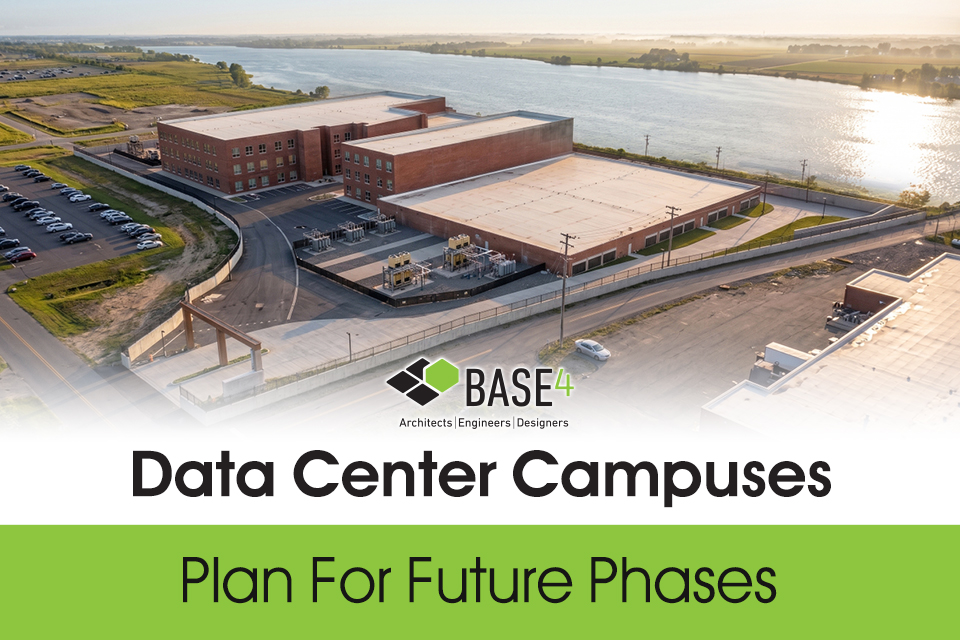
Aerial view of a data center campus designed for future expansion beyond Phase One.
Friday, 31 July 2026 / Published in Data Center Insights

Data Center Campus Planning Beyond Phase One

Reading Time: 2 minutes

A data center campus may need to expand but have no practical way to do it.
Phase one can use land needed for future buildings, block utility routes, or place permanent equipment where later phases need access. The campus may control enough acreage and still lack a workable path to phase two.

Before approving the first building, test whether the full campus can grow without rebuilding completed work.

Pressure-Test Your Campus Plan


Phase One Can Limit Every Phase After It

The first building fixes many of the campus’s major decisions:

  • Roads and secure access
  • Grading and drainage
  • Utility corridors
  • Substations and backup power
  • Cooling and mechanical yards
  • Future building areas
  • Construction and service routes

Once these systems are built, moving them becomes expensive and disruptive.

Before approving the phase-one plan, ask:

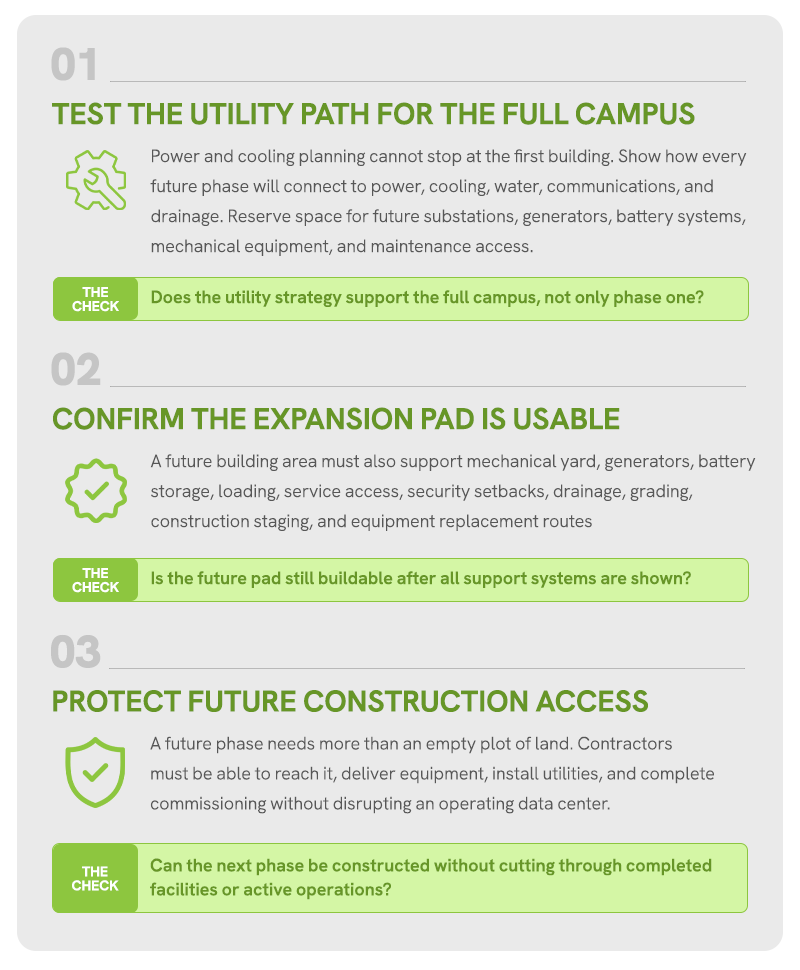
Can future buildings access power, cooling, roads, and drainage without undoing completed work?
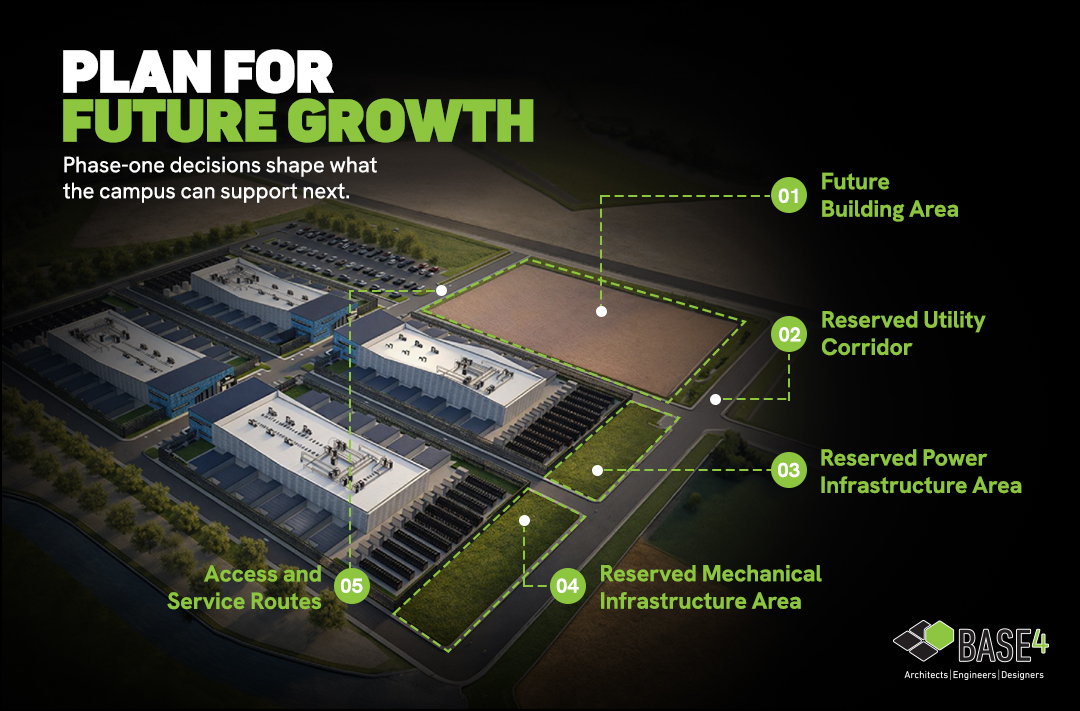
Illustration showing future building areas, utility corridors, and power infrastructure for a scalable data center campus.

Checklist showing utility planning, expansion space, and construction access for future data center campus growth.

BASE4 Plans Beyond Phase One

A scalable campus starts with a phase-one plan that does not create phase-two problems.

Why developers work with BASE4:

  • In-house teams coordinate buildings, utilities, and equipment zones.
  • Early planning protects future pads, roads, and access.
  • Revit and 3D models reveal conflicts before construction.
  • MEP teams plan future power and cooling routes.
  • Structural teams account for future equipment and building needs.
  • Visual models help owners and project teams align early.

The cheapest time to solve an expansion conflict is before Phase One fixes roads, utilities, and equipment zones.

Test Phase One Before Approval


Thank you,

Blair Hildahl
BASE4 Principal
608.304.5228
BlairH@base-4.com

Related Posts

  • Modern enterprise data center illustrating data center Tier classifications.
    Data Center Tiers Explained: Choosing the Right One
  • Aerial rendering of a prefabricated data center campus with multiple modular buildings and service areas.
    Prefab Data Center Construction Is Changing Delivery
  • Aerial view of a large data center campus near water with BASE4 branding and the headline AI demand is growing.
    AI Demand Is Growing. Most Markets Are Not Ready.
Tagged under: News

Leave a Reply Cancel reply

Your email address will not be published. Required fields are marked *

HOT NOW

  • Addressing The Rising Construction Costs
  • Major Hotel Prototype Upgrades
  • A Look Into Prefabrication

Popular Topics

loader
Meta Data and Taxonomies Filter

Tags

  •  
    loader
  •  
    loader
  •  
    loader
  •  
    loader
  •  
    loader
  •  
    loader
  •  
    loader
  •  
    loader
  •  
    loader
  •  
    loader
  •  
    loader
  •  
    loader
  •  
    loader
  •  
    loader
  •  
    loader
loader

Join 95,000 industry professionals

We send well-researched and expert-authored articles that help you build better.

Enter your primary/work email


STAY UPDATED

With our latest news and insights.

Enter your primary/work email

Florida Registered Architectural Firm - AA26003324

© 2026 BASE4 | All rights reserved.
  • PROJECTS
  • DATA CENTERS
  • MARKETS
  • INNOVATION LAB
  • BLOG
  • ABOUT
  • CONTACT
TOP