AI demand is pushing data center projects faster than traditional delivery can support. Grid delays, labor shortages, and permitting backlogs are stalling projects before they even break ground. Developers still relying on traditional construction are already behind. The faster path starts before construction, with a design that is ready for prefab, phasing, and coordination.
The Demand Is Real and Growing Fast
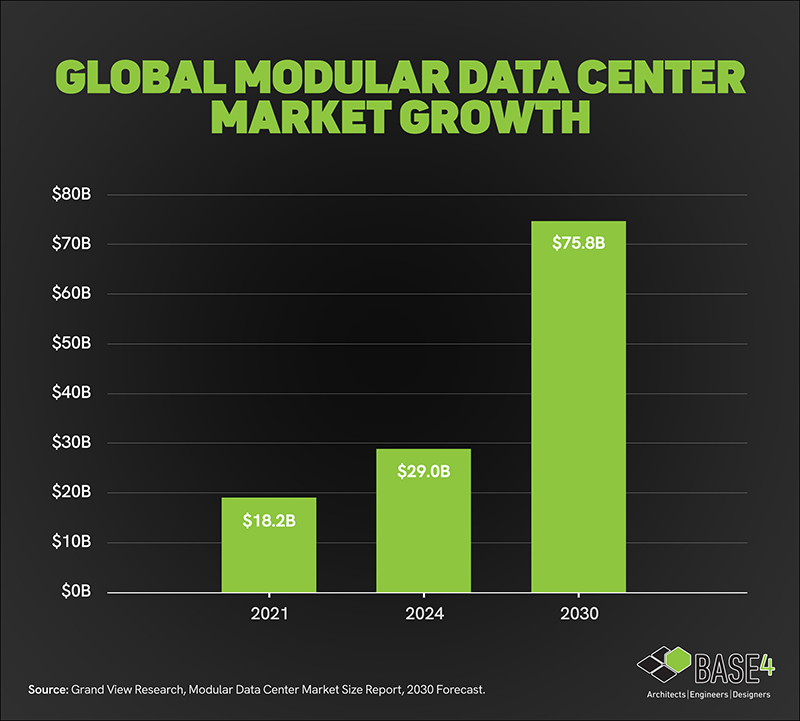
AI is changing how data centers get planned, designed, and delivered. That pressure is one reason modular data center solutions are gaining attention. The global modular data center market was valued at $29.04 billion in 2024 and is projected to reach $75.77 billion by 2030.
That growth is not happening by accident. Owners need scalable infrastructure that can be delivered faster than a traditional ground-up build.
For developers, the message is simple: speed to market is now a business requirement.
Traditional Builds Are Under Pressure
Traditional data center delivery is hitting limits in power, labor, permitting, and speed. Grid connections can take years. Skilled labor is stretched. Permitting can slow the project before construction even begins. These delays are expensive, especially when AI demand keeps rising.
Modular and prefab delivery helps solve part of that problem. By moving more work off-site, teams can reduce field complexity, improve quality control, and shorten the time between design and deployment.

Modular Is Already Happening
This is not a future idea. Companies are already delivering prefabricated data center systems that are assembled and tested before they reach the site. Some solutions use repeatable blocks that start small and scale as demand grows.
That matters because owners do not always need one massive campus on day one. They may need a system that launches sooner, expands in phases, and avoids redesign when capacity changes.
BASE4 Is Built for This
Modular data centers succeed when planning and coordination start early.
Why developers bring BASE4 in early:
- Architecture, structural, MEP, interiors, and visualization under one roof
- 100% Revit coordination before field conflicts become delays
- MEP-first planning for power, cooling, routing, and equipment access
- Prefab-ready layouts that support repeatable systems
- Phasing strategies that help projects expand without major redesign
- Cost-aware design decisions before drawings are too far along
- Clear permit and lender packages that help teams move faster
The teams that plan power, structure, MEP, and prefab strategy early will have the best chance to stay on schedule. The developers who plan early and build smart are the ones who win the timeline.

Thank you,
Blair Hildahl
BASE4 Principal
608.304.5228
BlairH@base-4.com