A data center can be outdated before it opens. The biggest risk is not choosing the wrong platform. It is designing the building so tightly around today’s equipment that the next upgrade requires major construction, new approvals, or downtime.
Developers need to know which decisions must last and which systems must remain changeable.
Equipment Changes Reach the Building
The next technology shift may not stay inside the rack. NVIDIA’s Vera Rubin platform coordinates computing, networking, power delivery, and cooling as one system. It shows how a technology decision can affect cooling, power distribution, controls, and the building itself.
That creates a risk for developers. A building designed around one rack density, cooling method, or power setup may require major construction when the equipment changes.
Choose the Adaptable Layers
Designing for every possible future is expensive. Designing for only one future is risky.
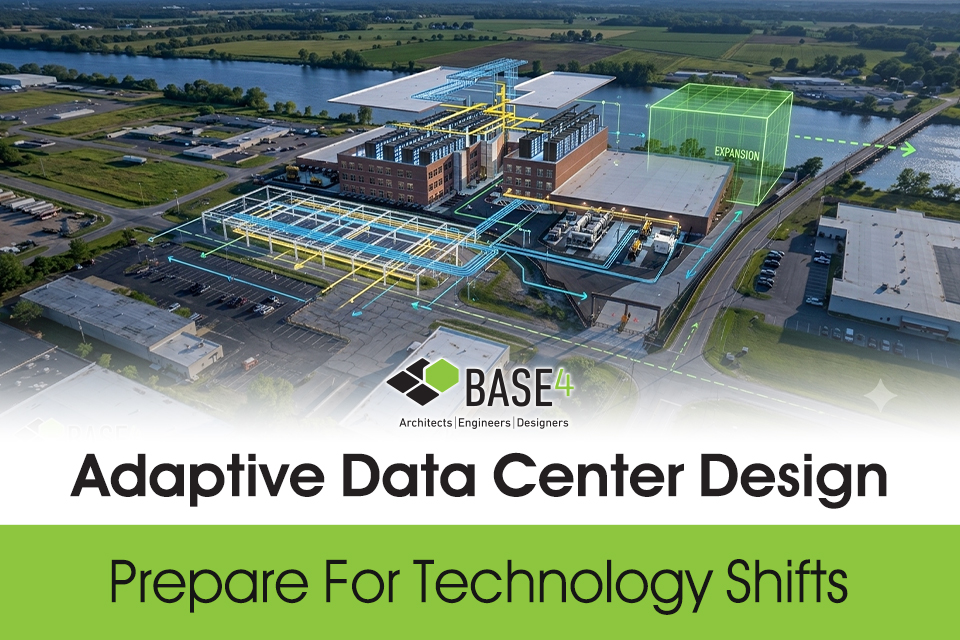
First, identify what will be difficult to change, including the site plan, structure, utility capacity, and main distribution routes. Then separate those decisions from systems that can be replaced, expanded, or added in phases.
Add flexibility where a future change would otherwise require major reconstruction, downtime, or another approval process.
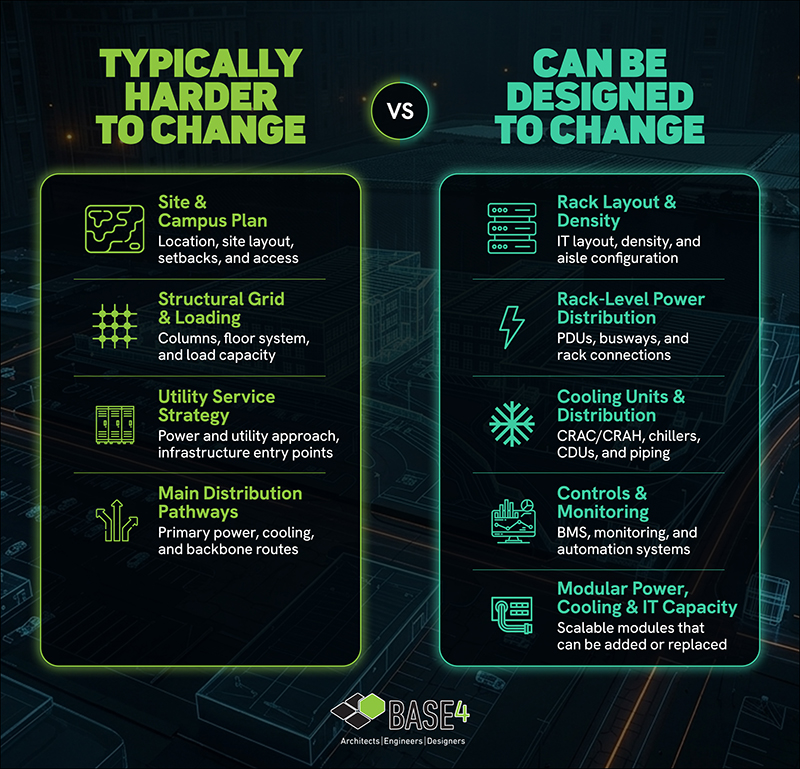
The goal is not to make everything flexible. It is to protect the parts of the building that would be hardest to change later.
Set Decision Gates
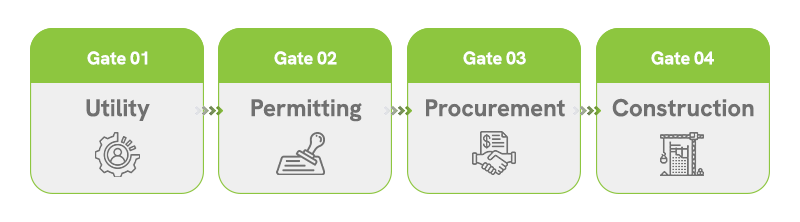
Recheck the technology plan before finalizing utilities, permit documents, equipment purchases, and construction. At each gate, confirm that the design still supports the planned power demand, rack density, and cooling system.
BASE4 Designs for Controlled Change
BASE4 helps developers preserve practical options without paying to overbuild every system.
Why developers work with BASE4:
- Scenario testing reveals which early assumptions could lead to expensive redesign.
- In-house architecture, structural, and MEP teams coordinate power demands, equipment locations, and future expansion routes.
- 100% Revit-based coordination helps preserve expansion space, equipment access, and clear installation routes.
- Cost-aware design places flexibility where future change would be most disruptive.
- Prefab expertise supports repeatable utility and equipment systems that can be added in phases.
- Permit-ready documents distinguish current construction from planned future capacity.
The goal is not to predict the winning platform. It is to keep one technology decision from controlling the entire facility.

Thank you,
Blair Hildahl
BASE4 Principal
608.304.5228
BlairH@base-4.com